
We cover all of wider Sydney
Pipe relining costs in Sydney typically range from $400 to $800 per linear metre. For most residential homes, a complete repair will sit between $3,000 and $5,000, while more complex jobs can range from $7,000 to $10,000.
But there’s no one-size-fits-all answer. Every job is different, and the cost depends on things like pipe diameter, the repair method, equipment required and how many people are needed on site.
We’ll break down exactly what goes into the cost of pipe relining so you know what to expect before you pick up the phone.
The cost of pipe relining depends on the size of the job. A small patch repair for a single crack or junction will cost much less than relining an entire drainage system across a large property.
To give you a general idea, here’s how most residential jobs break down.
Factor | Partial repair | Standard residential | Large-scale / complex |
Typical cost | $500 – $2,500 | $3,000 – $5,000 | $7,000 – $10,000+ |
Common examples | Patch repair, single junction, localised crack | Full house drain repair, multiple sections | Multi-line systems, deep pipes, difficult access |
Time to complete | 2 – 4 hours | Half day to full day | 1 – 3 days |
Method | Sectional patch relining | Inversion relining | Inversion relining, junction relining, robotic cutting |
These are guide prices only. Every job is different, and the final cost will depend on factors like pipe diameter, access, the condition of the existing pipes and how many junctions are involved. We always carry out a camera inspection first so we can provide you with an accurate quote for the exact work that needs to be done.
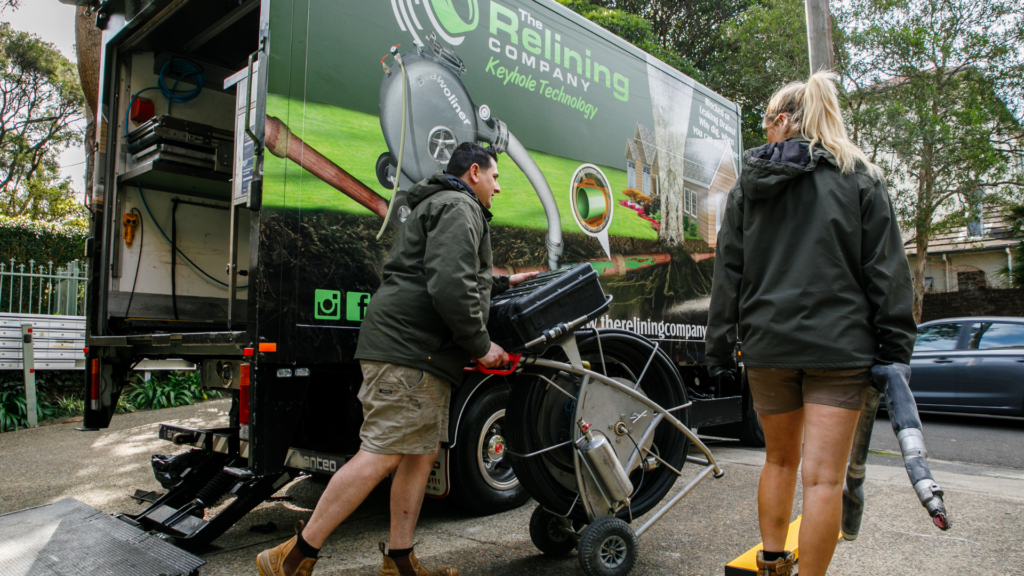
One of the biggest differences between pipe relining and pipe replacement is what you’re covered for after the job is done.
With pipe relining, our product has a 50-year life expectancy, and we back every installation with a 35-year warranty. That means you’re covered for decades, not just a few years. With traditional pipe replacement, the only warranty you’re entitled to is the 6-year statutory warranty under Australian Consumer Law. After that, any issues that come up are on you.
Factor | Pipe relining | Pipe replacement |
Product life expectancy | 50+ years | Varies by material |
Installation warranty | 35 years | 6 years statutory only |
Covers workmanship | Yes | Yes (within statutory period) |
Covers materials | Yes | Manufacturer dependent |
Transferable to new owner | Yes | No |
No two jobs are the same, and there are a few things that will influence the final price of your pipe relining repair. Understanding what goes into a quote can help you know what you’re paying for.
The size of the pipe is one of the biggest cost drivers. Larger pipes need more liner, more epoxy and longer curing times. A standard 100mm residential drain costs less to reline than a 150mm or 225mm sewer line.
Most Sydney homes have a mix of pipe sizes running through the property, so the quote will reflect what’s needed for each section.
A patch repair on a single crack is a very different job from a full inversion reline across several metres of pipe. If we need to do junction relining where two pipes meet, or use robotic cutting to clear debris and reinstate junctions after relining, that increases the scope. We always explain which method we’re recommending and why before any work starts.
Every repair method has its own setup cost. That comes down to the equipment needed and how many people are required on site. A standard residential job might only need a small crew. A more complex repair with difficult access or multiple methods could need more gear and more hands. All of this is factored into your quote upfront.
Getting to the pipe matters. Most properties have an inspection point at ground level that gives us enough access to get the camera in and complete the reline. But if access is tight, the pipe is in an awkward spot, or we need to work around existing structures, there’s more setup involved.
Pipes under driveways, slabs or landscaped areas add complexity too. Because relining is no-dig, we can usually still reach them without excavation, but the prep work can take longer.
We can’t reline a pipe that’s full of tree roots or debris. It needs to be cleaned out first, usually with a jet blaster or robotic cutter, depending on what’s in there. The more work the pipe needs before we can start relining, the more it can cost.
We use Brawoliner, a German-manufactured textile liner with an epoxy-coated exterior. It’s the only seamless liner on the market with this design, and it’s backed by a 50-year life expectancy. Cheaper products might save money upfront, but they don’t last. The quality of what goes into the pipe is a big part of why we offer a 35-year warranty on every job.
Digging up a drain is messy, noisy and disruptive. It damages your landscaping, your driveway or your garden, and it never looks the same afterwards. No matter how well the surface is restored, you can always tell where the work was done.
Pipe replacement also ends up being 30 to 40% more expensive once you factor in the excavation, rubbish removal, extra labour and putting everything back together afterwards.
Then there’s the time. A small section of pipe replacement takes 1 to 2 days. We can reline the same section in about 4 hours.
When a section of old clay pipe is replaced with new PVC, rubber connections are used to join them together. The problem is that these connections create a lip inside the pipe that catches toilet paper and debris. Ground movement can also shift the rubber over time, leading to leaks and blockages. With pipe relining, none of that is an issue. You get one continuous seal inside the existing pipe with no joints and nothing to catch on.
Less cost, less time, less mess and a better result that’s going to last. That’s why we recommend relining over replacement for most jobs.
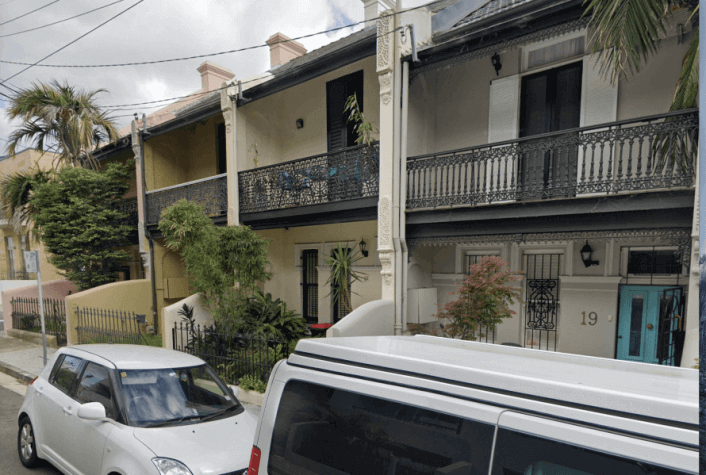
A row of terrace homes in Paddington had a shared sewer line running from the furthest house down to the Sydney Water main. Tree roots had entered through defective collars along the entire length of the pipe, causing repeated blockages across all five properties.
Replacing the pipe would have meant excavating along the full run of terraces, disrupting driveways, gardens and shared access areas. For five property owners splitting that cost, it would have been significant.
Instead, we relined over 30 metres of pipe in one continuous run using our Brawoliner inversion method. Once the liner cured, we used robotic cutting to reinstate all the branch line junctions connecting each house back to the main drain. The entire job was completed without any digging, and the cost was split between the five owners, making it an affordable fix for everyone.
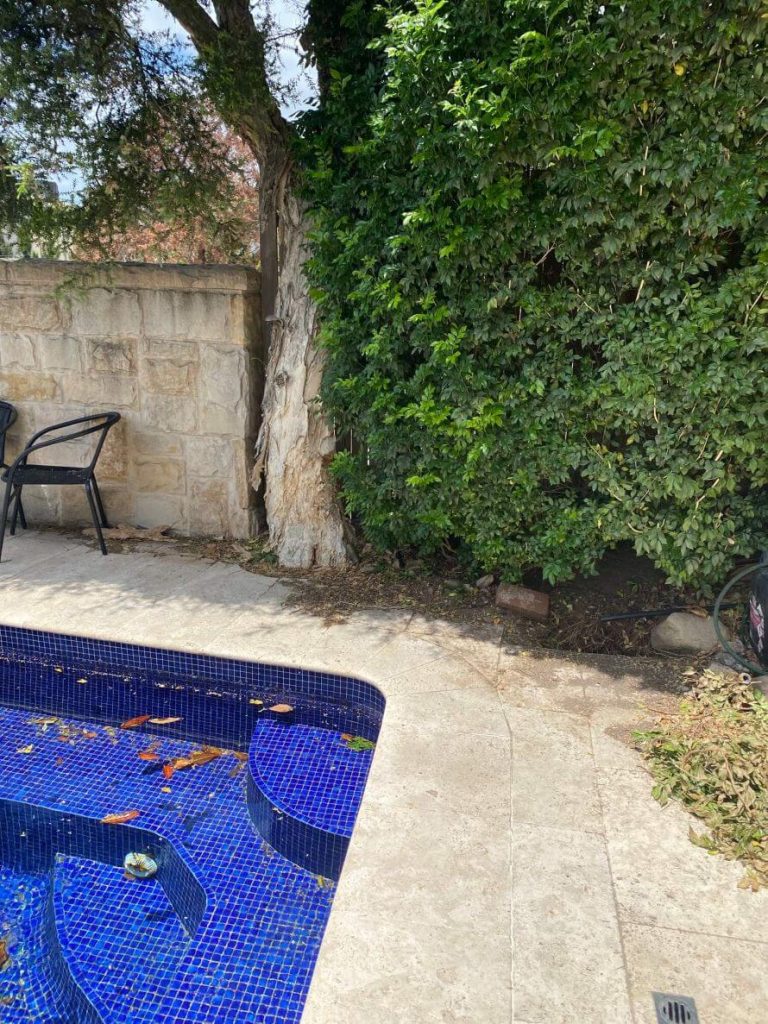
A homeowner in Drummoyne was dealing with backyard flooding every time it rained. His plumber inserted a camera into the pipes and found that the main stormwater line, which collects water from both sides of the house, had been crushed by a large paperbark tree sitting directly on top of it.
The problem was access. The damaged pipe ran right next to the swimming pool, and the only way to replace it would have been to remove the tree. The owner didn’t want to do that because it was the only privacy screen between his property and the neighbour.
We spent around 4 days using robotic cutting to grind open the crushed pipe and restore it back to its original diameter. Once that was done, we relined the full length of the pipe using a glass-reinforced liner with epoxy resin, giving it double the strength of a standard liner. It was a slow job, but the result meant no tree removal, no excavation next to the pool and no damage to the property.
Every pipe relining job is different, and the only way to get an accurate price is to see what’s going on inside the pipe first. We offer a free 30-minute on-site consultation where we put a camera in the pipe, show you the problem and give you a detailed quote on the spot.
If the job needs more than one approach, we’ll give you options. If it makes sense to stage the work over time to fit your budget, we can do that too. We also offer payment plans so you can get the repair done now and pay it off.
We were the first pipe relining company in Sydney and we’ve been doing this for over 10 years. We’re family-owned, available 24/7, and we back every job with a 35-year warranty.
Give us a call on 0404 879 929 or book a free consultation below.
We come out to your property and do a 30 minute on-site inspection using a CCTV camera. That lets us see the pipe diameter, the extent of the damage and what method is needed to fix it. From there we put together a quote on the spot based on the equipment, materials and staff required. Every job is priced individually because no two pipes are the same.
Yes, most of the time. We understand that drain repairs are usually an unexpected cost, and most people don’t have money put aside for it. If the full repair isn’t within your budget right now, we can prioritise the most urgent sections first and come back to do the rest later.
We also offer payment plans through Brighte so you can get the work done now and pay it off over time.
Yes, the liner sits inside the existing pipe so the diameter does reduce slightly. But an old pipe that’s cracked, rough or full of buildup is already restricting flow. A relined pipe has a completely smooth interior, so most people actually end up with better drainage than they had before.
We supply all common pipe materials, including PVC, clay, cast iron, concrete and copper, in sizes ranging from 40mm up to 450mm in diameter. If you’re not sure what your pipes are made of or whether they can be relined, we’ll find out during the camera inspection.
It depends on your policy and what caused the damage. Some home insurance policies cover damage to pipes caused by unexpected events, but general wear and tear or tree root damage is usually not covered.
We’d recommend checking with your insurer before booking any work. Either way, we can provide all the documentation and camera footage you need to support a claim if your insurer requires it.
