

When commercial drains fail in your Eastern Suburbs property, you need to know if pipe relining is the right fix or if you need traditional replacement.
Pipe relining repairs most damaged pipes without excavation. It’s faster and cheaper than digging up car parks. Your business stays open during repairs. But it doesn’t work for completely collapsed pipes or severely damaged sections.
Here’s what pipe relining can and can’t do for commercial properties in Sydney, so you know if it suits your situation.
What Is Commercial Drain Pipe Relining?
Pipe relining repairs broken pipe sections without digging. A resin-coated liner gets inserted into your existing pipe, inflated, and cured in place. You end up with a new pipe inside the old pipes.
First, a CCTV drain inspection finds the problem. A high-pressure water jet clears out tree roots, grease, and debris. Then the flexible liner, coated with epoxy resin, is inserted through an access point, inflates against the pipe walls, and cures with UV light. Once complete, you’ve got a structural pipe repair lasting 50+ years.
Commercial drain relining is different to residential work. Commercial plumbing systems handle way higher flow rates. A busy kitchen produces ten times the wastewater of a house. The pipes are bigger, runs are longer, more junctions to work around.
In Eastern Suburbs buildings, especially Federation-era buildings in Woollahra and Paddington, the existing pipework is often original cast-iron or earthenware from the 1920s-50s. These old pipes are perfect for relining if they haven’t completely collapsed.
What Are The Pipe Relining Advantages For Commercial Properties?
Minimal Business Disruption
The biggest advantage of pipe relining is… your business stays open. Traditional pipe replacement means excavation, blocked access, and shutdown for days or weeks. Commercial pipe relining takes 4-8 hours.
Traditional excavation drags on 3-7 days minimum. Outdoor areas blocked, car parks unusable, no pedestrian access.
If you own a restaurant or a retail business, you can keep serving customers through the entire relining process.

Cost-Effective Solution
Drain relining saves 30-50% compared to traditional pipe replacement. But the real savings go beyond the pipe repair quote.
Traditional methods bring hidden costs such as business closure, permit fees, traffic management, skip bins, and excavation labour. Then you have to reinstall everything after.
For strata commercial properties, pipe relining means no disruption to neighbouring units.
Long term, relined pipes last 50+ years with barely any maintenance. Similar or better than a new pipe installation. For commercial property owners watching capital expenditure, pipe relining is cost-effective and protects the budget.
Preserves Property Infrastructure
Excavation impacts expensive finishes. Traditional pipe replacement requires digging through courtyards, established landscaping, and custom paving. For heritage buildings in Woollahra where council approval is needed for any external work, drain relining avoids those complications entirely.
It also preserves concrete slabs, car parks, structural footings, and underground services. Eastern Suburbs commercial buildings sit above a maze of pipes, cables, and conduits. Start digging, and there is a chance you’ll hit electrical or water mains. Pipe relining works inside the pipe system, avoiding the risk.
Structural Strength & Longevity
Relined pipes aren’t a patch. They create a seamless, jointless pipe within your existing pipe that’s stronger than traditional repairs.
The epoxy resin liner bonds to interior walls, reinforcing deteriorated pipes. Unlike PVC sections joined with rubber couplings that fail over time, drain relining creates a continuous seal along the whole length.
No joints means no weak points for tree roots. Moreton Bay figs and native trees lining Eastern Suburbs streets crack into pipe joints constantly. Pipe relining provides complete protection against invasive tree roots.
Commercial plumbing handles chemicals, grease, and high temperatures. Restaurant kitchens pump hot water mixed with oils and cleaning products. Quality epoxy resins stand up to it for decades.
Environmentally Responsible
Traditional excavation creates truckloads of waste. Broken concrete, contaminated soil, and old pipe sections are taken to the landfill. Pipe relining produces minimal waste, just debris from cleaning.
For Eastern Suburbs properties near coastal areas or heritage precincts, reduced environmental impact helps with approvals and sustainability commitments.
Meets Compliance Without Major Works
Getting commercial pipe repairs through compliance is painful. Excavation needs council permits, traffic plans, and in heritage areas, multiple authority approvals.
Drain relining requires minimal or no permits and causes no external disruption. Work happens underground through existing access.
The finished product meets Sydney Water requirements and Australian Standards for commercial plumbing systems. Relined pipes can be certified for trade waste compliance without a full system and drain replacement.
Disadvantages & Limitations Of Commercial Drain Pipe Relining
Not Suitable For Severely Damaged Pipes
Pipe relining requires at least 20-30% of the existing pipe structure to remain intact. Complete collapses or severely damaged sections won’t work.
“Deteriorated” versus “collapsed” matters. Deteriorated pipes have cracks, holes, and missing wall sections, but keep enough structure for liner adhesion. Collapsed pipes have lost their shape entirely and have missing sections.
Older Torrens title commercial properties in the Eastern Suburbs have original 1920s-50s drainage systems reaching the end of their life. CCTV inspection shows whether damaged pipes are suitable for relining or require full replacement.
When pipes are severely damaged or significantly misaligned, forcing pipe relining fails. The liner won’t adhere properly, creating wrinkles and weak points that could lead to future issues.
Limited Effectiveness For Complex Pipe Configurations
Not all commercial drainage suits pipe relining equally. Multiple tight bends make it difficult to get the liner around corners. Each bend adds complexity and may reduce repair effectiveness.
Very small diameter pipes under 100mm are tricky for commercial relining work. Plus, commercial properties renovated multiple times create pipe mazes at different levels and angles.
Requires Specialist Expertise
Pipe relining isn’t something every plumber does, and quality varies. Commercial-grade relining needs serious investment in equipment, materials, and training.
Look for operators with commercial experience, not just residential relining. The scale, pressure, and complexity of commercial plumbing require different expertise. Quality installations require certified materials, proper UV-curing equipment, and experienced techs who understand commercial applications.
The risk of poor installation is real. Bad pipe preparation, wrong liner sizing, incomplete curing, and wrinkles all compromise repairs. Issues might not show immediately, but cause failures later.
For commercial properties, insist on operators providing detailed before-and-after CCTV footage, material certification, and strong warranties backed by insurance.
Upfront Cost Higher Than Basic Repairs
Simple crack in an accessible pipe? Basic spot repair might cost less than relining the whole run.
This hits commercial properties with tight budgets or limited capital expenditure. Upfront investment in pipe relining is higher than the cost of quick-fix patches, even though the long-term value is better. But patch repairs rarely solve underlying problems. One section of old pipes fails, and adjacent sections are probably in a similar condition.
Access Limitations In Some Buildings
Pipe relining needs less access than excavation, but still needs access points for equipment and liner insertion. Multi-storey buildings can be challenging if damaged sections sit between floors or in hard-to-reach areas.
Older Eastern Suburbs commercial buildings with basements or underground car parks sometimes have pipes through confined spaces where manoeuvring equipment is difficult. The relining team may need to remove fixtures temporarily or create new access points.
For heavily modified commercial properties, finding suitable access requires investigation. It doesn’t usually make relining impossible, but it can add complexity and cost.
Pipe Diameter Reduction
The liner that creates your new pipe adds 3-6mm thickness to the pipe walls. This slightly reduces the internal pipe diameter.
For most commercial applications, this reduction is negligible and doesn’t affect flow rates or system performance. But if your pipes were already undersized for commercial flow demands, any further reduction could be problematic.
This matters for high-volume operations such as commercial kitchens, car washes, and facilities with intensive water use. A thorough assessment before committing to pipe relining identifies whether diameter reduction could cause issues for your application.
Not A Solution For External Drainage Issues
Pipe relining fixes the pipes themselves, but won’t address problems caused by external factors.
If drainage design is fundamentally flawed with insufficient fall or incorrect sizing for current usage, pipe relining won’t fix the design problem. You’ll get a sound, leak-free pipe, but if the system can’t handle the required flow, you’ll still have problems.
For commercial properties with drainage issues, a comprehensive assessment determines whether the problem lies in the pipes or requires broader drainage solutions.
When Drain Relining Is The Best Choice For Commercial Properties
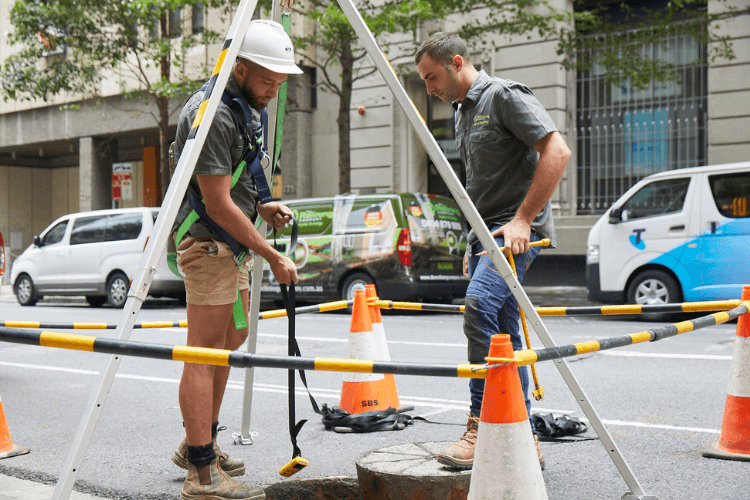
Pipe relining works when your pipes are deteriorated but still structurally intact. Cracks, leaks, tree root invasion, and aging pipes that haven’t completely collapsed.
It’s particularly good for Eastern Suburbs heritage buildings (avoids council approval headaches), strata properties (no tenant disruption), and any business that can’t afford closure.
The decision comes down to three things:
- Are your pipes suitable?
- Can we access them?
- Does it cost less than alternatives?
When Traditional Excavation May Be More Appropriate
If your pipes have collapsed more than 70%, need re-grading for proper fall, or you’re already doing major excavation work, traditional replacement makes more sense. Sometimes a combination works best: reline the hard-to-access sections, replace the rest.
| Your Situation | Best Solution |
|---|---|
| Pipes deteriorated but structurally intact | Pipe relining |
| Complete pipe collapse (70%+ failed) | Traditional replacement |
| Tree root invasion | Pipe relining |
| Incorrect pipe fall/grade | Traditional replacement |
| Heritage building, can’t excavate | Pipe relining |
| Very short section (under 2m) | Spot repair/patching |
The Commercial Drain Relining Process
The process starts with a CCTV inspection to locate the problem. A high-pressure water jetter will clear any drain blockage, tree roots, and debris. Then the resin-coated liner gets inserted through an access point, inflated to fit the pipe walls, and cured with UV light or heat. Post-installation CCTV confirms the repair worked.
Work includes before-and-after footage, compliance documentation, and warranty coverage.
Making The Right Decision
Commercial pipe relining offers a powerful solution for commercial drainage problems, but it is not a universal solution. Most commercial drain issues in Eastern Suburbs Sydney properties are suitable for relining, particularly tree root damage, pipe deterioration, and cracking common in older buildings.
The advantages of minimal disruption, lower overall costs, and long-term durability make pipe relining the preferred choice for commercial properties when technically feasible. The key is proper assessment by specialists who give honest advice on whether relining suits your situation.
If your commercial property has plumbing issues, blocked drains, or aging pipes, the next step is a professional drain inspection. Understanding what’s happening underground is the foundation for smart repair decisions.
For Eastern Suburbs Sydney commercial property managers and business owners, pipe relining typically offers the best balance of cost, disruption, and long-term performance. Contact The Relining Company for a CCTV drain inspection to see what’s happening in your pipes and get an honest assessment of your options.
FAQs
What is the disadvantage of pipe relining?
- Doesn’t work for completely collapsed pipes or sections with less than 20-30% structural integrity
- Reduces internal pipe diameter by 3-6mm
- Requires specialist expertise that not all plumbers have
- Higher upfront cost than simple spot repairs for short sections
- Complex pipe configurations with multiple tight bends or junction points may need additional work
Does pipe relining really work?
Yes, pipe relining works extremely well when properly applied to suitable pipes. The process creates seamless, structural pipe within your existing pipe, lasting 50+ years. Relined pipes resist root intrusion, are corrosion-proof, and handle commercial flow volumes effectively.
Why would you line drainage pipes?
You’d line drainage pipes to fix damaged pipes, cracks, leaks, and tree root problems without digging up your property. For commercial properties, it keeps your business open during repairs, protects car parks and landscaping, and costs 30-50% less than traditional replacement. It’s especially useful for heritage buildings, strata properties, or anywhere excavation would cause major disruption.
How long does trenchless pipe lining last?
Trenchless pipe lining, properly installed with quality materials, lasts 50+ years. Epoxy resin liner creates durable, corrosion-resistant pipe handling commercial flow rates and chemical exposure. Many commercial installations come with 25-35-year warranties on workmanship, with materials expected to outlast the warranty period by a significant margin.
For comparison, traditional PVC pipe replacement typically lasts 30-40 years, making properly installed pipe relining a longer-lasting solution for commercial applications.
Back to Top