

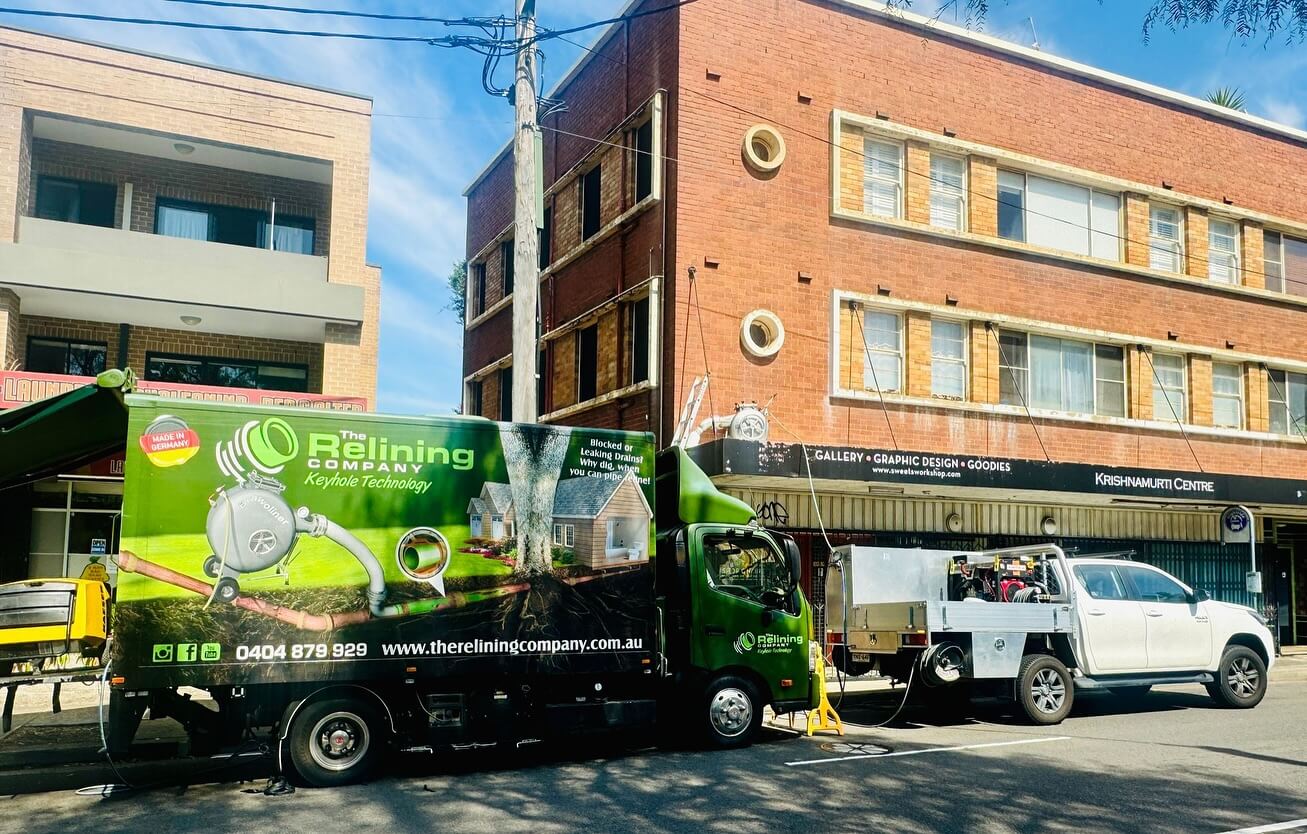
Sydney CBD buildings are choosing pipe relining over excavation because it fixes damaged pipes without the road closures, tenant shutdowns and council permit delays that come with traditional pipe replacement in a dense urban environment.
Beneath the city’s footpaths and high-rises, you’ve got pipe systems spanning more than a century of construction running alongside metro tunnels, electrical conduits, telecommunications cables and stormwater mains. When something goes wrong with a building’s plumbing system, professional pipe relining is the practical, lower-disruption alternative to traditional excavation.
Trenchless pipe relining is a pipe repair method that fixes sewer pipes and stormwater lines from the inside out. A resin-coated textile liner is inserted into the existing damaged pipe, inflated and cured in place to form a new pipe within the old one. No traditional excavation, no road closures, no multi-day shutdowns. The result is relined pipes with a seamless, jointless structure that lasts for decades.
Why the Sydney CBD Presents Unique Pipe Challenges
Generic pipe repair advice doesn’t account for what’s happening underground in the CBD. Buildings here range from heritage sandstone commercial blocks to modern high-rise office towers, and the pipe material inside them is just as varied. Original clay and cast iron sewer pipes sit alongside PVC and concrete, sometimes within the same building and often in hard-to-reach vertical stacks.
Then there’s everything else sharing that underground space. Metro tunnels, water mains, electrical infrastructure and telecommunications cables all compete for room beneath CBD streets. Traditional pipe replacement means coordinating with Sydney Water, multiple asset owners and the City of Sydney council for road opening permits and traffic management plans. That’s what makes pipe relining the preferred approach for most CBD commercial buildings.
For commercial property owners, the real issue is business continuity. A retail store, restaurant or office tower that loses access to toilets or kitchen facilities can’t operate. Traditional methods of pipe replacement can take days, and in the CBD, where every hour of downtime carries a real cost, that timeline isn’t acceptable.
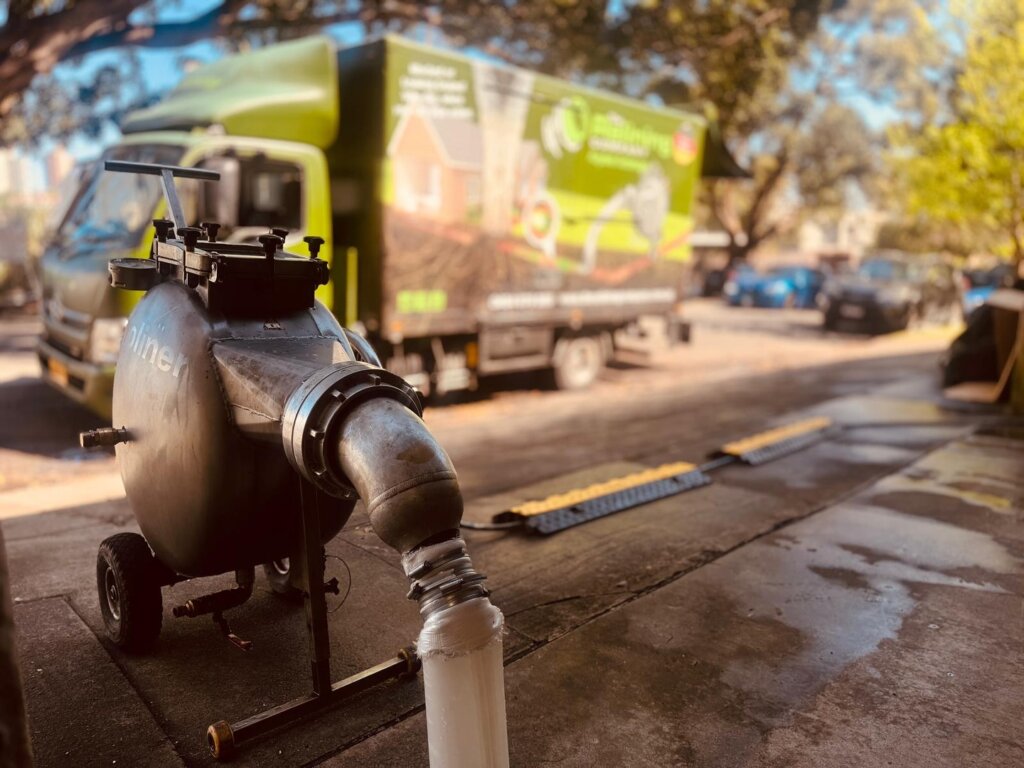
How Pipe Relining Works in a Commercial CBD Setting
The relining process follows four steps, and in most commercial settings, the whole job is completed within a single day with minimal disruption.
It starts with a CCTV drain inspection. A camera is fed through the pipe to map the damage, identify the pipe material and locate access points. In CBD buildings, this is typically done through existing access points in plant rooms or basements, without disrupting tenants or public footpaths.
Next, the pipe is cleared using high-pressure water jets and (where needed) robotic cutting to remove tree roots, grease, debris or anything else blocking the line. Robotic cutting is particularly useful in commercial buildings where precision matters and surrounding structural integrity can’t be compromised. Even pipes that are completely collapsed can often be reopened using robotic cutting before the pipe lining process begins.
The Brawoliner textile liner is then inserted into the existing pipe, positioned and cured in place. The epoxy resin bonds to the pipe walls, creating a seamless, jointless new pipe inside the old one, backed by a 35-year workmanship warranty. The final CCTV pass confirms that the liner is seated properly and that the pipe is flowing as it should.
The Case for No-Dig Pipe Repair in a High-Density Urban Environment
When you compare pipe relining vs traditional pipe replacement in a CBD context, the differences go well beyond cost.
Traditional excavation in the Sydney CBD requires road-opening permits, traffic management plans, and coordination across multiple authorities. That process alone can add weeks of lead time before any actual pipe repair begins. Trenchless pipe relining reduces or eliminates that requirement because the work is performed inside the existing pipe with minimal disruption at street level.
Pipe relining offers same-day completion for most commercial jobs, with minimal noise and no tenant displacement. Compare that to the multi-day disruption of traditional methods, and the decision isn’t difficult.
There’s also the structural protection angle. No excavation means no risk to building foundations, basement carparks, facades or neighbouring properties. For heritage-listed buildings, which Sydney’s CBD has plenty of, trenchless pipe repair allows internal pipe work to be completed without the structural intervention that can trigger additional council consent processes.
On cost, trenchless sewer relining typically runs between $400 and $800 per metre. Without the need to reinstate roads, paving, tiling or landscaping, the total project cost is substantially lower than traditional excavation and replacement.
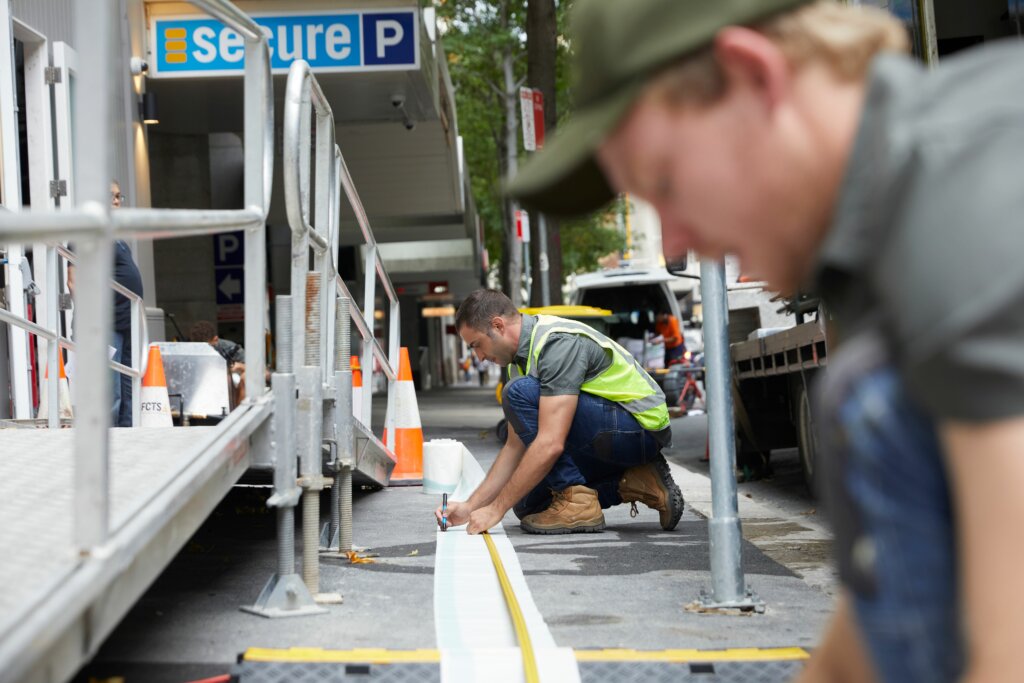
CBD Building Types That Benefit From Pipe Relining
High-Rise Office Towers
Ageing pipes buried in vertical stacks are one of the most common issues, particularly where cast iron transitions to newer materials at different floor levels. Trenchless pipe relining lets you repair these underground pipes without opening walls or ceilings across multiple floors.
Retail and Hospitality Venues
Grease and fat accumulation in kitchen drain lines causes recurring blockages, and when a restaurant or cafe can’t afford to close for even a single service, same-day pipe relining services make the difference.
Strata Residential and Mixed-Use Buildings
Damaged pipes in shared sewer systems on one level can affect every unit in the building. Relining provides the body corporate with a long-term solution and the detailed compliance reporting they need for decision-making.
Heritage and Sandstone Commercial Buildings
Sydney’s CBD has a significant stock of heritage-listed buildings. Trenchless pipe repair works in their favour because there’s no structural intervention involved, keeping additional council requirements off the table.
Industrial and Warehouse Buildings
Buildings on the CBD fringe tend to have larger-diameter underground pipes and more heavily used drainage systems. Trenchless sewer repair handles damaged drains in these settings without the disruption of traditional methods.
Common Pipe Problems in Sydney CBD Commercial Properties
Building managers in the CBD often see the same pipe problems recur. If not repaired, any of these can escalate into more costly repairs down the track.
- Tree root intrusion through cracked pipes and joints, particularly near street-level plantings
- Grease and fat buildup in commercial kitchen drain lines, causing recurring blockages
- Corrosion and scaling in aged cast iron sewer pipes that restrict flow over time
- Cracked or displaced joints caused by building settlement or vibration from ongoing construction and metro tunnelling
- Slow drainage or recurring blockages across multiple floors, which usually points to vertical stack damage
- Stormwater pipe deterioration in older buildings where the original drainage system was never designed for current load
Why Choose The Relining Company for Sydney CBD Work
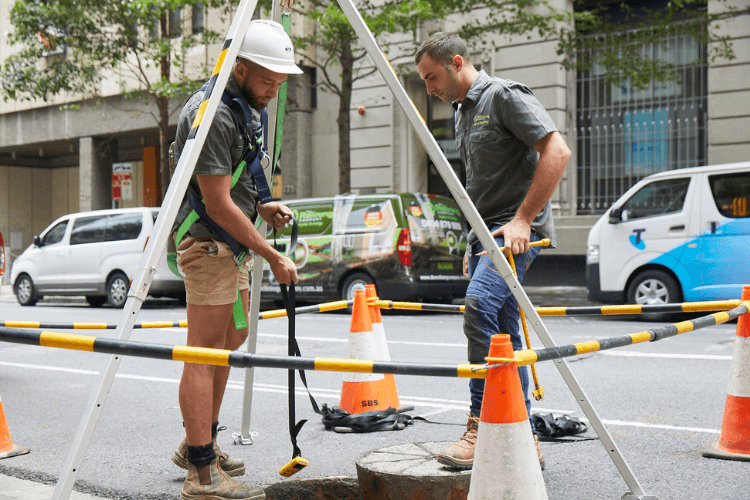
The Relining Company has been delivering pipe relining Sydney-wide since 2014, backed by a team with over 20 years of industry experience across commercial, civil and strata projects. The team is ISO certified and NSW Fair Trading licensed, which matters for commercial clients who need contractor compliance documentation for procurement and body corporate reporting.
Every job uses the Brawoliner CIPP system with a 35-year workmanship warranty and a 50-year expected life. You get the same team from start to finish, with detailed reporting at every stage.
If your CBD building has damaged pipes, blocked drains or ageing plumbing that’s overdue for attention, book a free consultation or call (02) 8999 7295 for an obligation-free quote.
Back to Top